
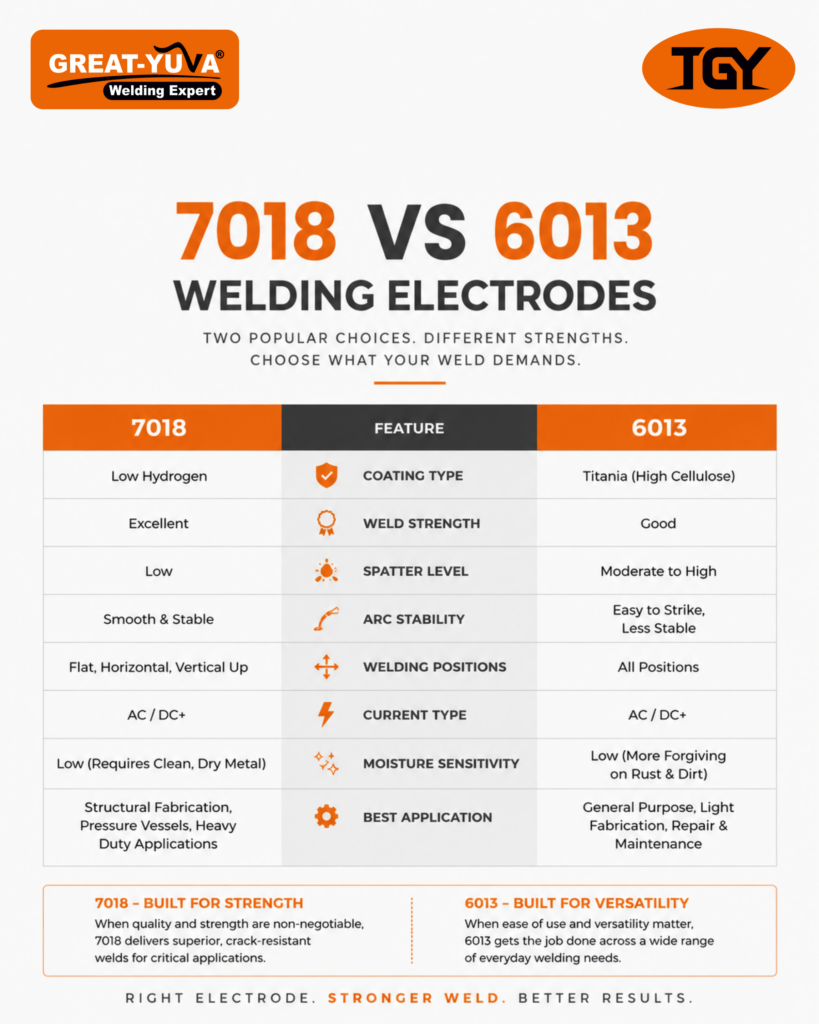
7018 vs 6013 Electrodes: Which Welding Electrode Is Right for Your Application?
28 July 2026
Selecting the right Welding Electrode can have a major impact on Weld Strength, Appearance, and Overall Performance. 7018 and 6013 Electrodes are two widely used options for Mild Steel Welding, but they are designed with different Characteristics and Applications in mind. Understanding the difference between them can help Welders choose the Right Consumable for their Specific Requirements.
Understanding 7018 Electrodes
7018 is a Low-Hydrogen Electrode commonly used when High Weld Strength and Structural Integrity are important. It is widely used for Structural Steel, Heavy Fabrication, Bridges, Pressure Vessels, and Other Demanding Applications.
The Low-Hydrogen Coating helps reduce the risk of Hydrogen-related cracking when the Electrodes are properly stored, handled, and used. 7018 also produces Strong and Reliable Welds, making it a Preferred Choice for applications where Weld Quality and Mechanical Properties are critical.
Understanding 6013 Electrodes
6013 is a Rutile-Coated, General-Purpose Electrode known for its Smooth Arc, Easy Arc Starting, and Good Weld Appearance. It is commonly used for Mild Steel Fabrication, Maintenance Work, Sheet Metal, and General-Purpose Welding.
Its ease of use makes 6013 a popular choice for applications where Smooth Operation and Good-looking Welds are important. It can also be used in Multiple Welding Positions depending on the specific Electrode and Application Requirements.
7018 vs 6013: Key Differences
The main difference between 7018 and 6013 is their Intended Application and Welding Characteristics. 7018 Electrodes are generally selected for Applications requiring Higher-Strength Welds and Low-Hydrogen Characteristics, while 6013 Electrodes are often preferred for General Fabrication, Ease of Use, and Smooth Weld Appearance.
7018 requires Greater Care during Storage because Exposure to Moisture can affect the Low-Hydrogen Characteristics of the Electrode. 6013 is generally easier to handle and is commonly used for Routine Welding Applications.
Which Electrode Should You Choose?
The choice between 7018 and 6013 depends on your Material, Application, Required Weld Strength, Welding Position, and Operating Conditions. For Structural and Heavy-duty Applications where Strength and Low-Hydrogen Welding are important, 7018 can be a suitable option. For general Fabrication and Applications where Ease of Welding and Smooth Finish are Priorities, 6013 may be more appropriate.
When searching for the Best Welding Electrode in India, it is important to consider the Electrode’s Quality, Consistency, Classification, and Suitability for your particular Welding Requirement rather than choosing solely based on Popularity.
Choose the Right Electrode for Better Results
Both 7018 and 6013 Electrodes have Specific Advantages and Applications. Understanding their differences allows Welders to select the Right Consumable for the Job and achieve More Consistent Welding Results.
GREAT-YUVA offers a range of Welding Consumables designed to meet Diverse Industrial Welding Requirements. Choosing the Right Electrode, Combined with Proper Storage, Welding Parameters, and Technique, can help deliver Reliable and High-quality Welds.